
Improving deepwater species catch data
Through angler catch logs on the GotOne app
Contribute to deepwater species data collection with the GotOne app

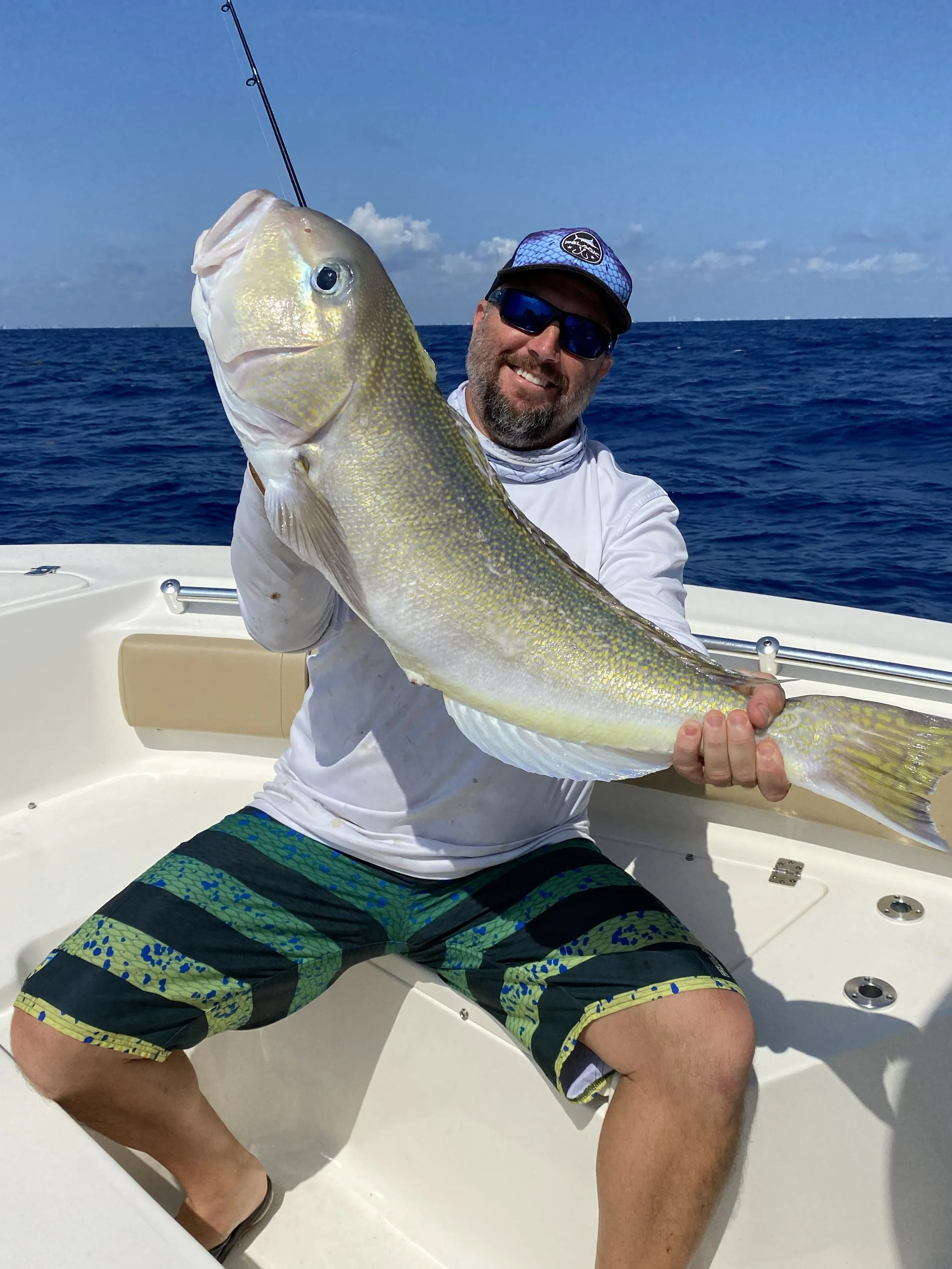
When you fish for deepwater species like Queen Snapper, Snowy Grouper, Blueline Tilefish, Golden Tilefish, Warsaw Grouper, Speckled Hind (Calico Grouper/Kitty Mitchell), or Silk Snapper (Yellow Eye), you are holding a vital piece of the fisheries management puzzle. GotOne is partnering with The Nature Conservancy to help recreational anglers contribute to the sustainable management of these deep-dwelling fish.
Through this partnership, your catch logs provide critical data that helps maintain healthy fisheries. Because these species are rarely encountered through traditional surveys, the information you provide is essential for scientists to understand the health of these populations and how the recreational sector fishes for them.
Precision Data for Conservation
To help gain the most accurate insights, the app will offer optional fields to capture specialized data for these species:
Length & Weight: Recording the length and weight of your catch helps scientists map population health and age structures across different regions.
Depth: Logging the depth where the fish was hooked provides essential data on the habitat preferences of these deepwater species as well as their risk of post-release (discard) mortality.
Catch Outcome & Health: You can log the specific result of the catch—including whether the fish was kept, released, or lost to depredation (sharks or other predators). If released, you can note if life-saving measures like venting or a descending device were used to combat barotrauma.
Your Privacy, Protected
Participation in this survey is entirely optional; when you log a qualifying species, GotOne will ask if you’d like to share your data for that specific catch.
If you choose to participate, your specific "hot spots" remain safe. Your data is anonymized and your location is generalized to a multi-mile-wide region. You get to keep your secret coordinates while providing the high-level geographic data needed to better manage these deepwater species.
As the project progresses, we will share updates and insights right here on the GotOne app and in our community newsletters!
Identifying deepwater species is a challenge because their colors often shift as they come up from the depths. Here is how to spot each one and—more importantly—how to tell them apart from the "usual suspects."
Snappers
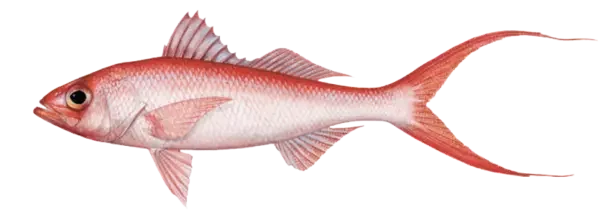
Queen Snapper
The Look: Slender, brilliant red body with a deeply forked, streamer-like tail.
Don't Mistake For: Vermilion Snapper (Beeliner). While both are red and slender, the queen snapper has a much more dramatic, deeply forked tail and grows significantly larger.
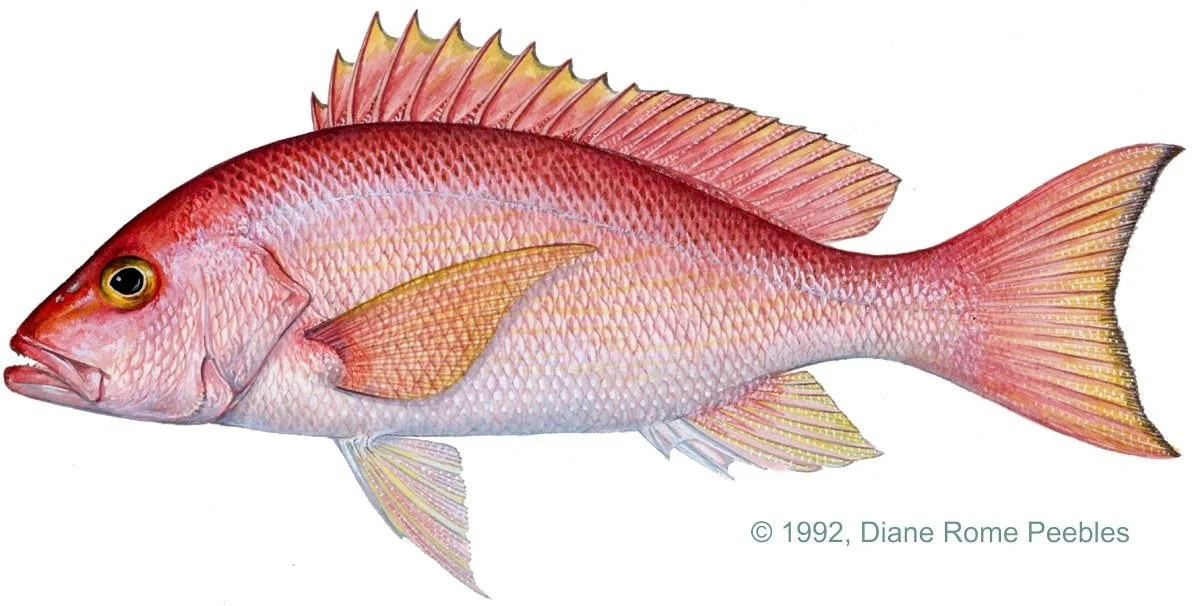
Silk Snapper (Yellow Eye)
The Look: Pinkish-red with fine, wavy yellow lines on the sides.
Don't Mistake For: Red Snapper. The "tell" is the eye: silk snappers have a bright yellow iris, whereas red snappers have a red iris. Silks also have a yellow margin on their tail.
Groupers & Hinds
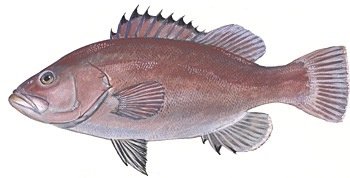
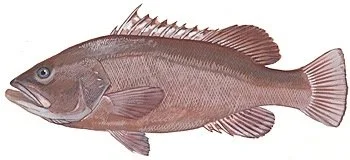
Snowy Grouper
The Look: Dark brown with a white "pearled" spot pattern (more prominent in juveniles).
Don't Mistake For: Yellowedge Grouper. Both live in similar depths, but the yellowedge has a distinct yellow trim on its pectoral fins and a clear blue line from the eye to the mouth, which the snowy lacks.
Warsaw Grouper
The Look: Massive, dark reddish-brown to grey-black.
Don't Mistake For: Gag or Misty Grouper. The warsaw is the only grouper in our area with 10 dorsal spines (the second spine is very long). Almost all other groupers have 11 spines.
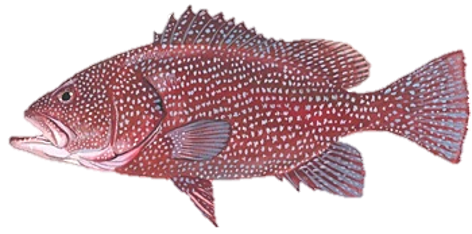
Speckled Hind (Calico Grouper)
The Look: Reddish-orange to brown, covered in tiny, dense white spots.
Don't Mistake For: Rock Hind or Red Hind. The speckled hind lives much deeper and has a much higher density of spots. If you see white or yellow edges on the fins of a heavily spotted deep water grouper, it’s likely a speckled hind.
Tilefish
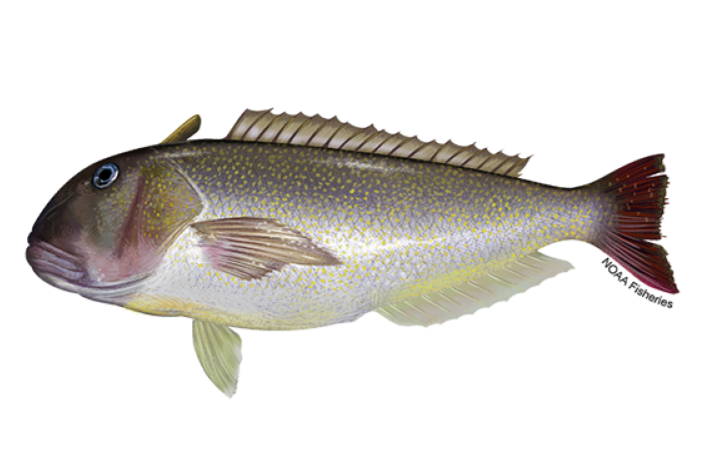
Golden Tilefish
The Look: Iridescent blue-green back with gold/yellow spots and a white belly.
The "Tell": They have a large, fleshy crest (adipose fin) on top of the head in front of the dorsal fin. If it doesn't have the "mohawk," it isn't a golden.
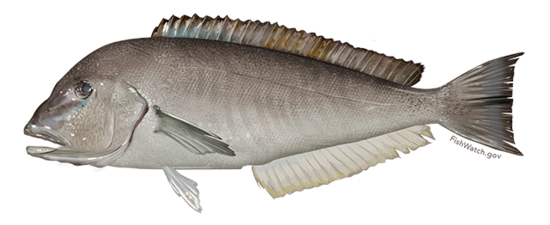
Blueline Tilefish
The Look: Olive-grey body with a lighter belly.
Don't Mistake For: Golden Tilefish. Bluelines lack the fleshy crest on the head. Look for a distinct blue line running from the bottom of the eye toward the snout to confirm it’s a blueline.
Species Identification
How to accurately record the length
When recording the length of your catch, you should use the total length of the fish. Measure in a straight line from the tip of the snout to the extreme tip of the tail fin. Adjust the tail by rotating or squeezing to obtain the maximum length of the fish.

Recording additional data about your deepwater species catch
When sharing your catch data with our research partners, in addition to the total length of the fish, you’ll be asked to record the following information. You do NOT have to fill out all the data if you are unable to do so, and remember, your catch logs are shared anonymously!
Weight:
If you have a scale handy, please record the weight of your catch, in pounds.
Result of catch:
Kept - fish was landed and kept (harvested)
Released - fish was landed and released
Released (vented) - fish was landed and released after venting the swim bladder
Released (descender) - fish was landed and released with the aid of a descending device
Lost - fish was hooked and species identified, but not landed
Lost (depredation) - fish was hooked and species identified, but was eaten by a predator (shark, dolphin, etc) before landing
Depth:
Estimate the depth at which the fish was hooked, in feet.
More information about deepwater species data collection
For more information about research into deepwater species, check out the following resources: